ANURA DUNUWILLE – THE CRICKETING STYLIST WHO PROMISED SO MUCH

Meeting Anura Dunuwille after nearly 40 years was a truly fascinating experience. When I visited him recently, accompanied by our 1981 skipper Fazal Majeed, we were greeted by a tall, distinguished man with shoulder-length grey hair, a far cry from the diminutive young batsman most of us remember so vividly from his days on the cricket field.
Anura, who lives in the town of Aluwihare, has become a devout follower of Lord Buddha. The Buddha’s teachings appear deeply embedded in his consciousness, and this was evident throughout our conversations, where he frequently drew upon them in his reflections on life.
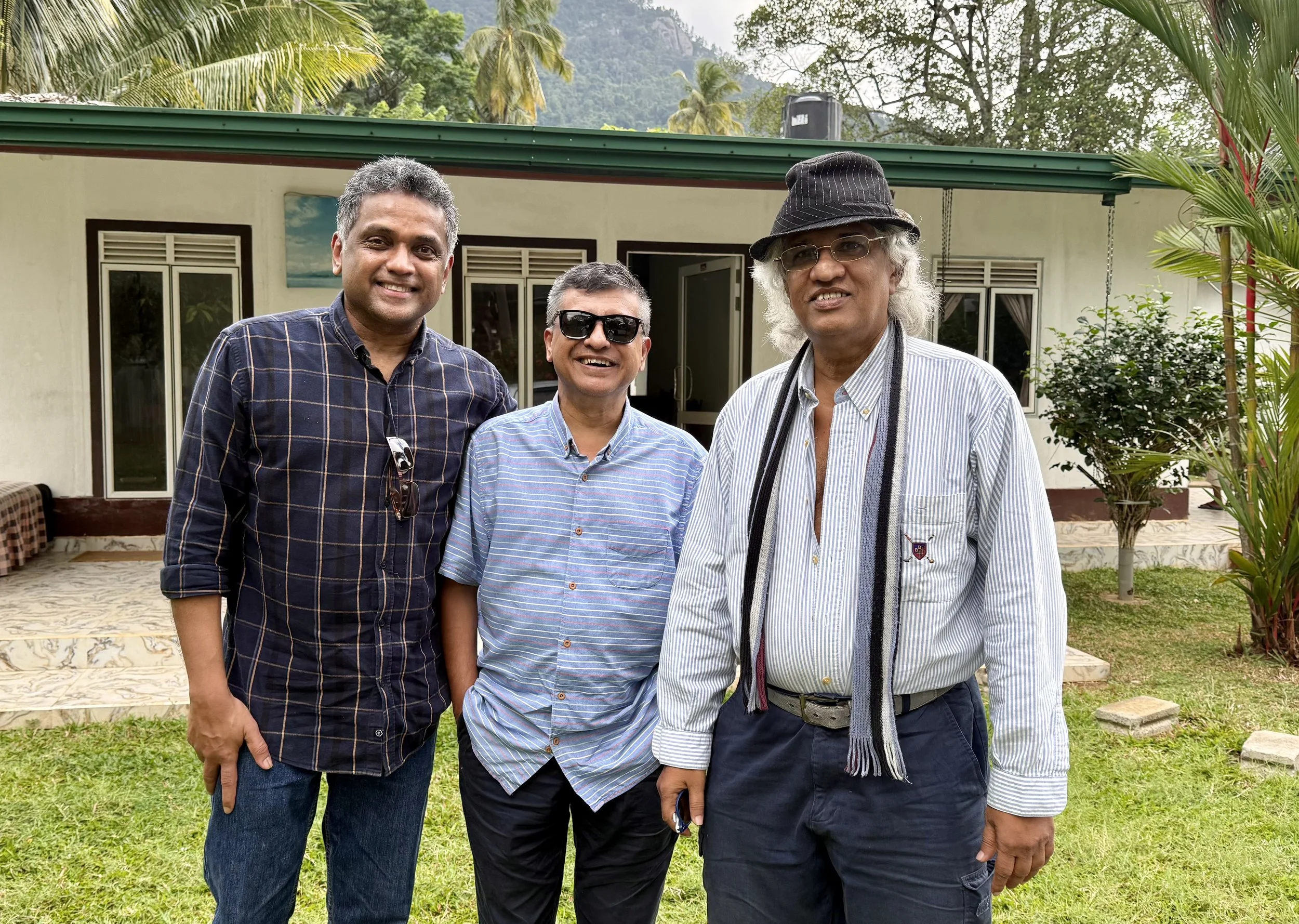
With Anura Dunuwille (right) and Fazal Majeed (middle) at Anura’s residence in Aluwihare
When it came to cricket, however, there was no shortage of memories. His recollection of his playing days remains remarkably sharp, and it was a real pleasure listening to him revisit the many stories and experiences from his school career.
Anura, who fashioned his batting on three of the game’s great left-handers, Sir Garfield Sobers, David Gower and Allan Border, said he learned much of his craft by watching footage of the legendary trio.
Let us now explore the intriguing story of a wicket-keeper batsman who promised so much at junior level, displayed flashes of brilliance at senior level, yet ultimately never quite fulfilled his immense potential.
JUNIOR CRICKET
At just 10 years of age, Anura announced himself as a cricketer to watch when he scored an unbeaten century against St. Thomas’ College, Bandarawela, in March 1974 in an Under-12 fixture. That innings quickly made him a household name among the College cricket fraternity and marked the beginning of a remarkable junior career. He soon established a reputation for regularly dismantling bowling attacks, scoring a succession of impressive half-centuries.
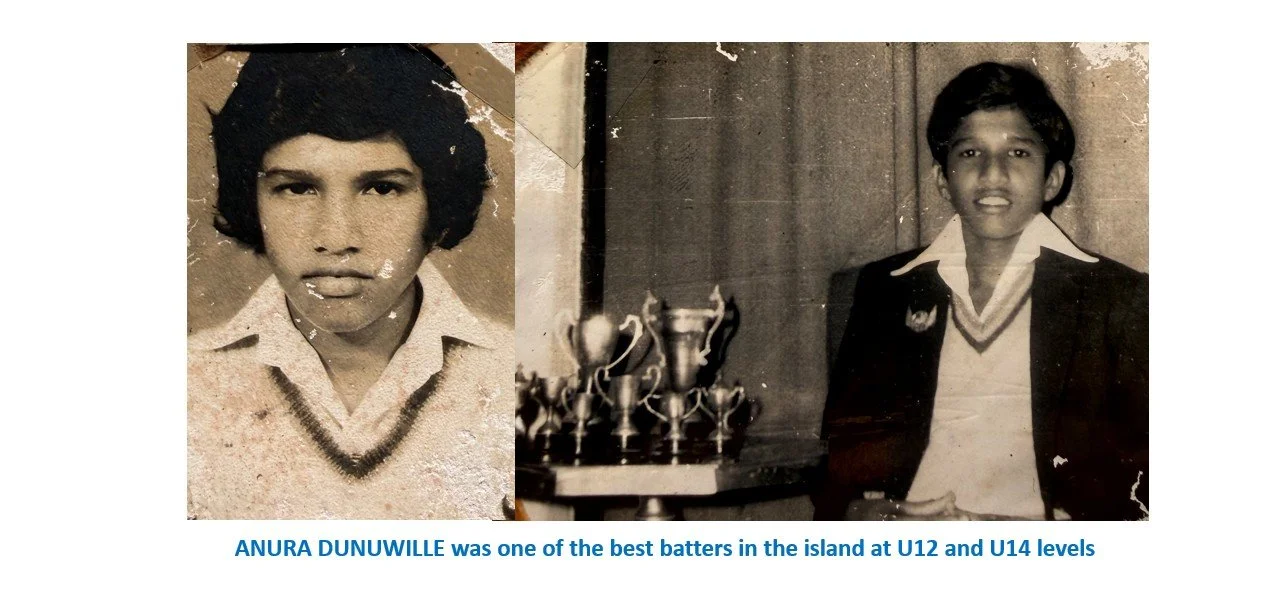
During the 1973/74 season, in addition to his unbeaten hundred, Anura scored 50 against Trinity College. The following season, still competing in the same age group, he continued his prolific run-making, with 52 vs St. Anne’s College, 56 vs St. Thomas’ College, Matale, and 63 vs Maliyadeva College in consecutive innings.
In 1977, as captain of the Under-14 team, Anura registered his second junior century, scoring 101 against Trinity College at Asgiriya. Later that season, against St. Sylvester’s College at Katugastota, he produced another outstanding all-round performance. In reply to the opponent’s paltry 16 all out, he batted aggressively to score a quick-fire 63 in an unbeaten opening stand of 88 before declaring the innings in pursuit of an outright victory. St. Sylvester’s were subsequently dismissed for 37 in their second outing, securing an innings win. In this game, Anura also demonstrated his brilliant wicketkeeping skills by accounting for eight dismissals, four catches and four stumpings, in the match.
He continued to make numerous valuable contributions at junior level before earning his place in the College First XI in early 1978, marking the beginning of the next chapter in what promised to be an exceptional cricketing career.
FIRST XI CRICKET
Anura made his First XI debut against Ananda at Katugastota as a 14-year-old, midway through the 1977/78 season, under the captaincy of Russel De La Motte. In that match, he found himself up against another 14-year-old who would go on to become a legend of Sri Lankan cricket, Arjuna Ranatunga.
Although Anura scored just two runs on debut, he quickly showed that he belonged at the highest level of school cricket. He followed it up with a determined 17 against St Joseph’s, being run out while batting at No. 8, before producing a fine 29 against Nalanda. His innings came in difficult circumstances, as he helped the Antonians recover to 154 through a valuable 48-run seventh-wicket partnership with Fazal Majeed.
A few weeks later, in his maiden Big Match, Anura produced another promising knock of 31. His strokeplay and composure caught the attention of Daily Mirror reporter M.E. Marikkar, who wrote: “Diminutive Dunuwille, only 14, was the cynosure of all eyes. Standing just one foot above the wickets, he smothered the Trinity attack during his 103-minute stay at the wicket.”
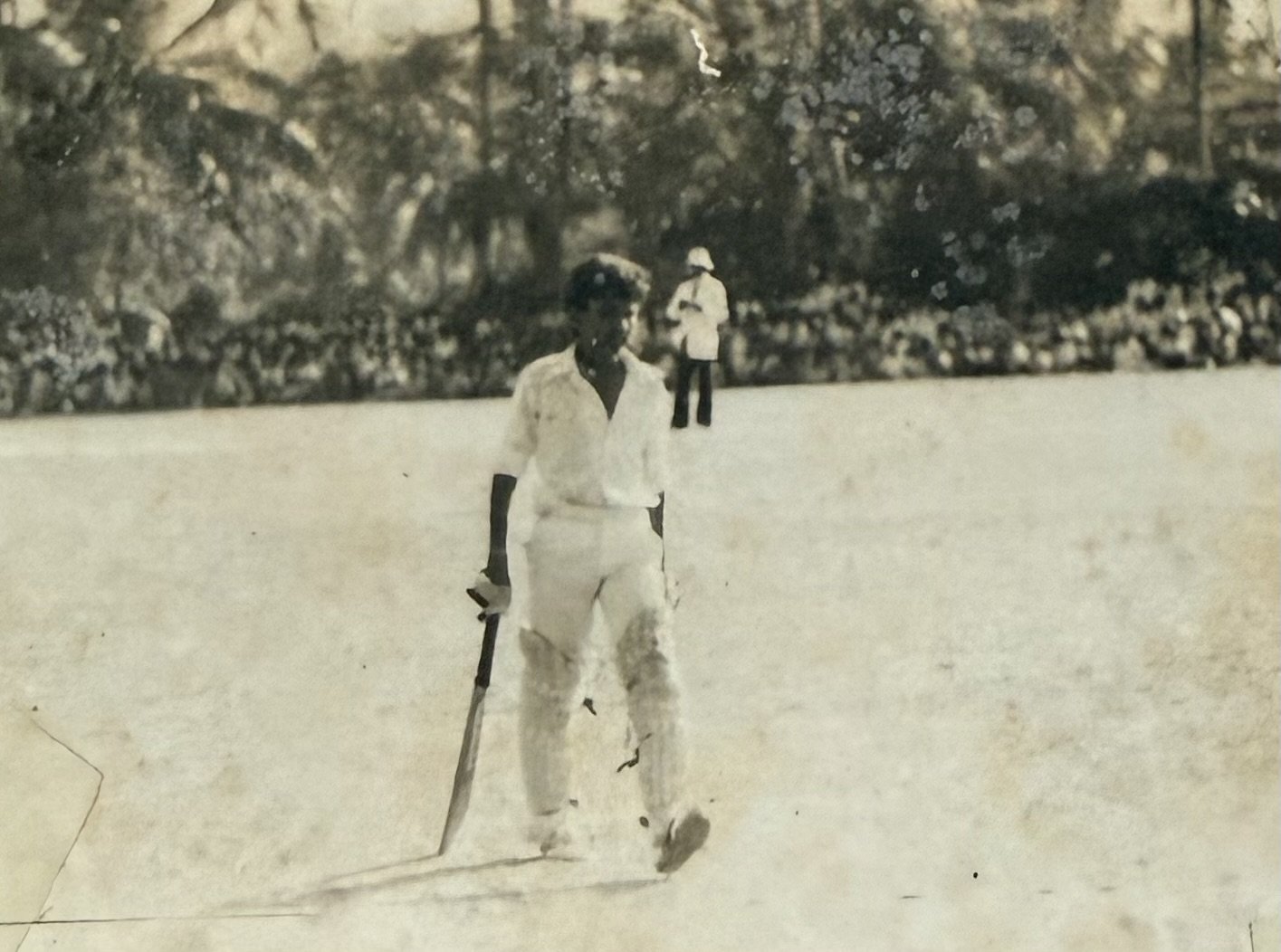
Anura walking back to the pavilion at Katugastota after being dismissed for 31 in his maiden Big Match
The following season, under Mohan Ratnakumar, Anura scored an elegant 85 against Dharmaraja at Katugastota, but apart from this knock, Anura’s run-scoring record for the season was disappointingly lean. Remarkably, that innings of 85 remained his highest score throughout his five seasons of First XI cricket.
In the 1979/80 season, under Angelo Leanage, he once again showed glimpses of his potential, but struggled to convert them into substantial scores. He managed only two fifties that season, an unbeaten 52 vs Dharmaraja and a top score of 58 vs St Peter’s.
Anura made over 500 runs in the 1980/81 season under Fazal Majeed, with four half-centuries including a superb 78 in the historic Big Match victory at Asgiriya. He followed this up with a composed 61 in the one-dayer against Trinity. These innings served as timely reminders of the class and ability that had always been evident in this gifted batsman.
Fazal, his captain in 1981, once remarked: “Anura was by far the most stylish batsman I have come across in my life. Put simply, the little fellow was a natural. He was a delight to watch in full flow. The elegance, grace and style he brought to the crease were a feast for the eyes. During our days at College, he was the darling of the crowds. They flocked in large numbers just to watch him bat.”
Anura captained College during the 1981/82 season and saved some of his finest performances for his final year. He amassed more than 700 runs during the season, registering five half-centuries, with a highest score of 73 vs Ananda. His other notable innings included 71 vs Nalanda, 61 vs St. Benedict’s, 55 vs St. Sylvester’s and 57 in the Big Match. In addition to these half-centuries, he recorded six other innings of 36 or more, underlining the consistency that made him one of the side’s most dependable batsmen.
Marlon Von Hagt, widely regarded as one of the finest batsmen ever produced by St. Anthony’s College, shared the crease with Anura throughout much of his school career at both junior and senior levels. The pair were involved in numerous productive partnerships, and Marlon remains one of Anura’s greatest admirers.
“Affectionately known as ‘Anna’, Anura was the benchmark that all of us at College aspired to emulate and surpass,” recalled Marlon. “He was an exceptionally talented and aggressive left-handed batsman, as well as a brilliant wicketkeeper. His performances set the standard for the rest of us, and he was someone we all looked up to.”
It remains difficult to understand how a batsman blessed with such natural elegance, and one who amassed multiple centuries in junior cricket, never managed to register a three-figure score at senior level. It is one of the enduring mysteries of a cricketer who always looked destined for greater things and who invariably raised expectations whenever he walked out to bat.
Yet, as Fazal aptly observed, “It’s not about how many runs he made. Even when he scored only a few, people still spoke about his artistry with the bat. That was Anura for us.” It is a sentiment with which I wholeheartedly agree, having followed his cricketing journey closely throughout his school career. While statistics may not fully reflect his talent, those fortunate enough to watch him bat will always remember the elegance, flair and sheer beauty he brought to the game.
OTHER CRICKET
After leaving school, Anura continued to pursue his cricketing ambitions both in Sri Lanka and overseas, remaining active in the game until the early 1990s before finally hanging up his bat.
In 1983, he travelled to England with his cousin, Devaka Mahanama, to play a season for Mill Hill Cricket Club in the Middlesex League. That same year, he earned selection to the Sri Lanka Under-19 team that faced a strong Tamil Nadu side. Playing alongside Marlon, Anura scored 22 in the only match of the series, while Marlon top-scored with 82.
Back in Sri Lanka, Anura represented Bloomfield Cricket and Athletic Club intermittently from 1983 to 1988. During this period, he played several valuable innings in important matches, with his highest score being a heartbreaking 99 against Negombo Cricket Club. In 1988, he also turned out for Land Reclamation in the Nationalised Services ‘A’ Division Tournament.
Australia featured prominently in Anura’s cricketing journey. His first stint in Melbourne came during the 1987/88 season when he and Devaka represented Ormond Cricket Club in the Victorian Sub-District competition. He later returned to Melbourne and played for Dandenong West Cricket Club in the DDCA Turf 1 competition during the 1990/91 and 1991/92 seasons. It was there that he finally achieved the elusive century that had so often escaped him in senior cricket, scoring a well-compiled 104 against Berwick.
Anura also broadened his cricketing adventures in Bangladesh, representing Rupali Bank, Dhaka, in the prestigious Navana Premier League during the 1988/89 season, adding yet another chapter to a career that took him to cricket fields across several countries.
Anura has fond memories of his cricketing days in Australia and, even today, can vividly recall many of his performances as well as the people with whom he shared those years. His experiences Down Under remain a cherished part of his cricketing journey.
Marlon quipped, “I felt a little unlucky that I never got the opportunity to play club cricket with him back home, largely because Anna played so much of his cricket overseas. Even today, I still hear cricket fans in Australia speak incredibly highly of his performances and achievements on the field.”
Marlon continued, “Anna is a thorough gentleman and a true role model for all young Antonians. He is a dear friend, and I feel both humbled and proud to have played alongside him and under his leadership. I wish him God’s richest blessings.”
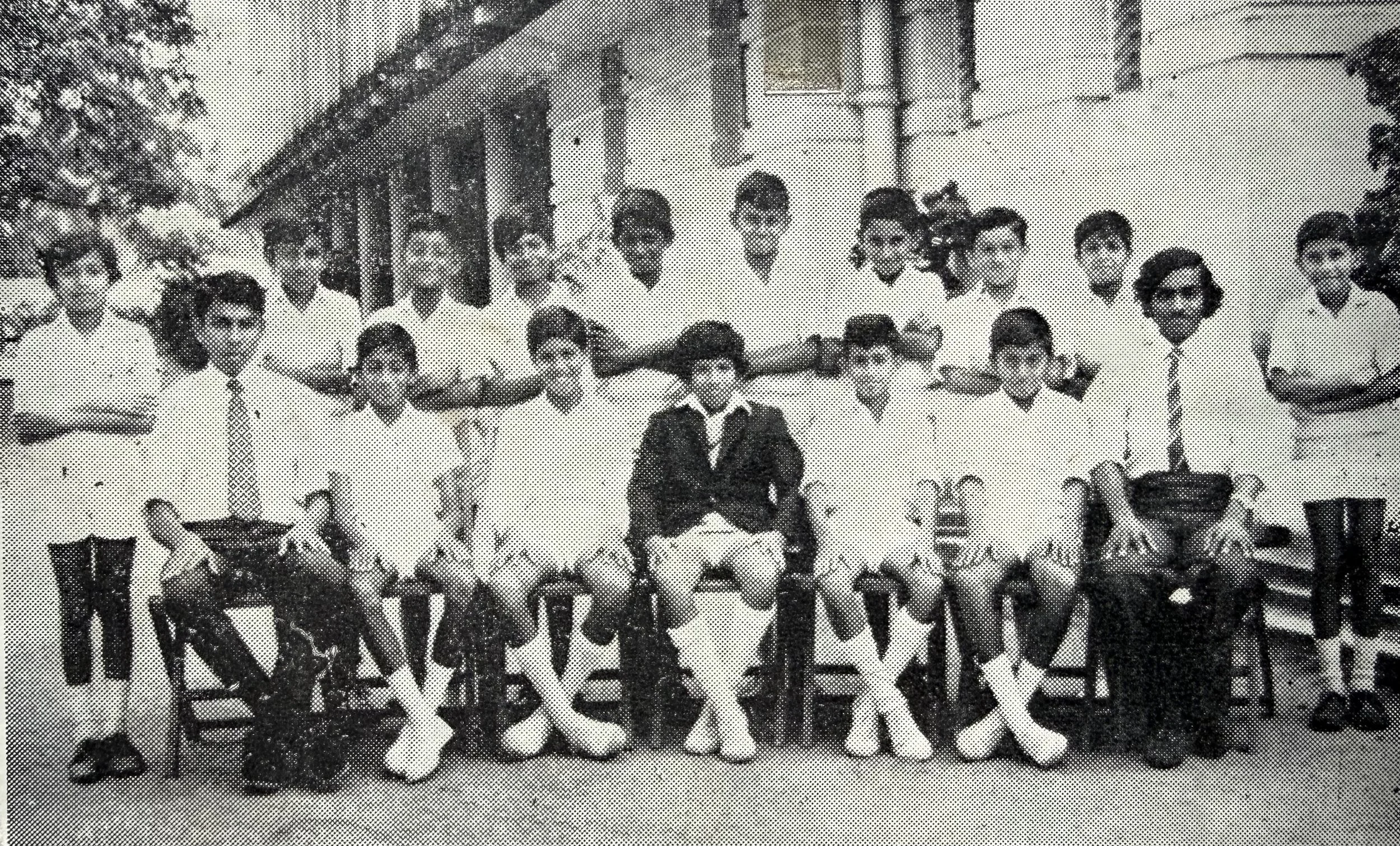
Under-12 side in 1975 under Anura
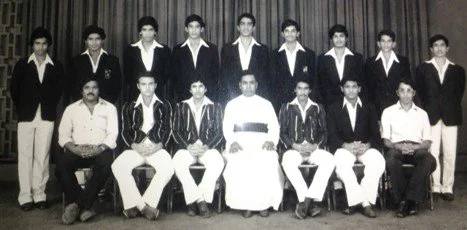
First XI side in 1982 under Anura